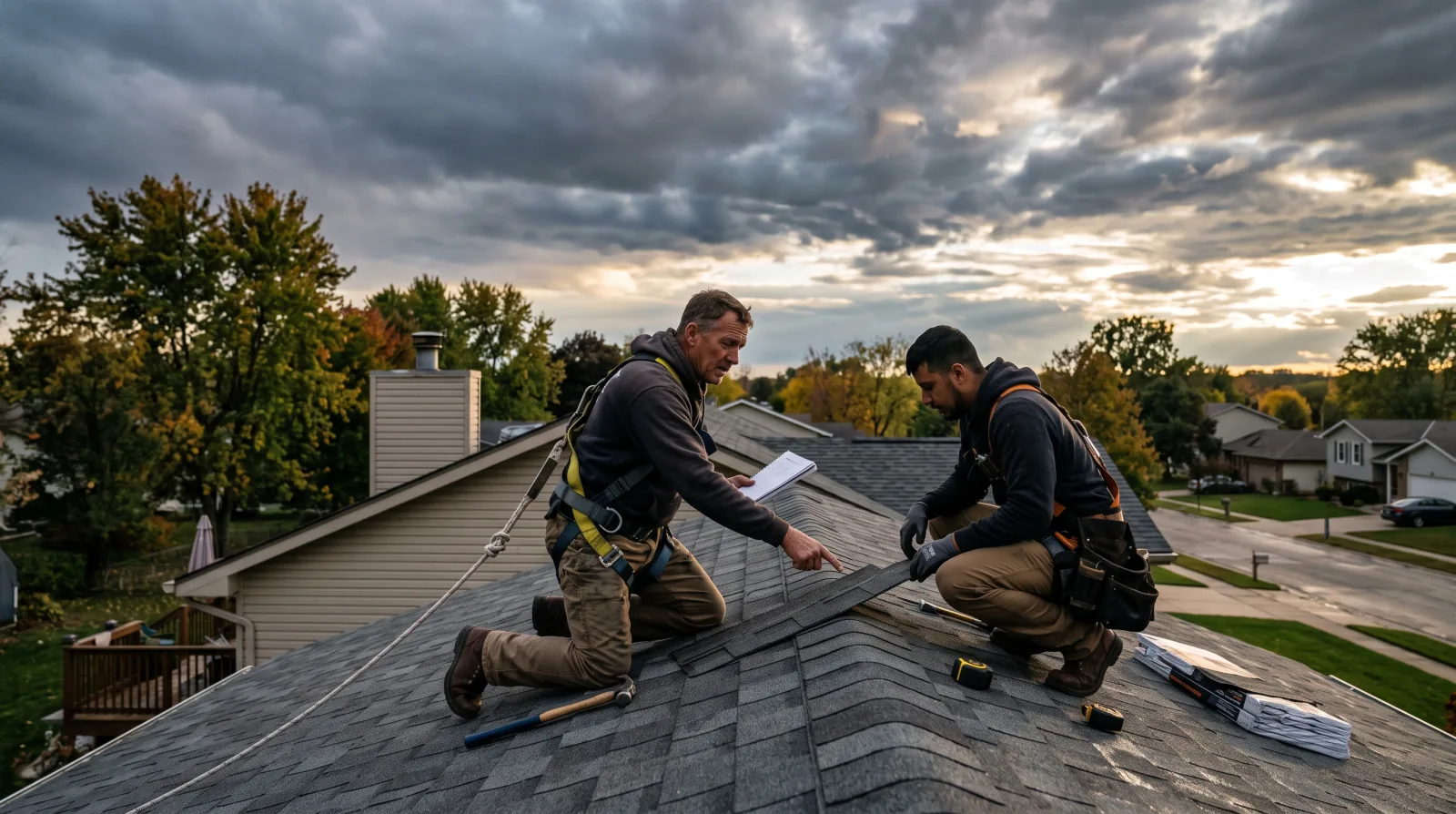
Tree work is, in truth, two businesses under one name. The first is planned: a homeowner looks at a tall fir leaning toward the house, or a hedge that has grown over the path, and decides in spring to get some quotes. They have time. They compare three companies, read the reviews, and choose carefully.
The second business begins at night, in the wind and rain, when a branch lands on a fence, a car or a roof. That customer is frightened, standing at the window with a phone, and will call the first company that looks real and seems to answer tonight.
A good tree service needs to win both, and the methods are different.
In short: planned work is won on the website, with a page for each service, real photos, a clear explanation of permits and prices, and the arborist credential stated so it can be checked. Storm work is won on the map, with accurate hours, a phone that is answered, an emergency page and reviews that describe a fast response. Insurance and credentials matter to both customers, because nobody wants a crew with chainsaws near their house without knowing who they are.
How do customers search for tree work?
The planned searches are specific. "Tree removal" with the city. "Tree trimming", "tree pruning", "stump grinding", "hedge trimming", "arborist near me", "tree health assessment". A homeowner worried about one tree may type a question: "is my tree dangerous?", "who can tell me if a tree is diseased?"
The storm searches are short and urgent. "Emergency tree removal." "Fallen tree removal." "Tree on house." "24 hour tree service." These are almost always typed on a phone, and they are almost always answered by the map.
And now a third kind of question, typed or spoken to an AI assistant: "who can remove a fallen tree from my driveway tonight?" or "do I need a permit to cut down a tree in my city?" An assistant can only recommend what it can read about you on the web: reviews, directories and your own website. Google's page on AI features says: "There are no additional requirements to appear in AI Overviews or AI Mode, nor other special optimizations necessary." A page that answers the permit question for your city is exactly what an assistant can quote.
How do you win the storm call?
Think of the customer at the window. They see three companies on the map. What decides the call?
First, whether you look available. Your hours on Google must be true. If you take emergency calls at night, say so in the hours and in the description, and then answer the phone. If you cannot, do not claim it, because the review will record the unanswered call.
Second, whether you look real. Photos of your own trucks, your crew in safety gear, a crane or a bucket truck if you have one, and real storm jobs: a tree on a fence, the same fence cleared the next morning. A stock photo of a forest tells the frightened customer nothing.
Third, what other customers say. A review that says, for example, "tree fell on our garage at midnight, they were here by morning and cleared it safely" answers the exact question the next storm customer has.
On the website, build an emergency tree removal page with the phone number at the top, before any other text. Explain what happens in the first hour: you make the area safe, you assess the damage, you remove what is dangerous first. Explain the paperwork you provide, such as photos and a written invoice, because a customer with damage will often need it for an insurance claim. Keep the page short and practical.
Roofers face the same pattern after storms, and we wrote about how they prepare in how roofers get more storm jobs. The lesson carries over: prepare the page and the profile before the storm season, because during the storm there is no time.
What should you say about the ISA Certified Arborist credential?
The International Society of Arboriculture, known as ISA, awards the Certified Arborist credential. ISA's own page calls it "Our most popular credential" and says the program "is accredited by the ANSI National Accreditation Board (ANAB) for meeting or exceeding ISO 17024 standards for certification bodies." It also says certified arborists "must also adhere to the Code of Ethics."
For a customer, what matters is that the credential can be checked. ISA runs a Find an Arborist platform on its consumer website, TreesAreGood.org, and says it "is designed to help the public, employers, and industry stakeholders easily find and verify ISA-credentialed tree care professionals."
So, if you or someone on your crew holds the credential, say so plainly, with the person's name, on the about page, on each service page and in the Google profile description. Tell customers they can verify it through ISA's directory. A credential a customer can check is worth far more to them than a badge they cannot.
If nobody on your team holds it, do not use the word "certified" loosely. Describe the real training and experience your crew has instead.
What should you say about permits?
Tree permits are one of the most common questions a homeowner has, and the rules differ from one city to the next. Many cities have a tree bylaw that decides which trees on private property need a permit, and some require a replacement tree to be planted.
As one example, the City of Vancouver's permit help page says: "Tree removal permits grant permission to remove tree(s) from private property, and may include a requirement to plant a replacement tree(s)." Other cities, even neighbouring ones, set their own rules.
This is an opportunity for your website. Write a page for each main city you work in that explains, in plain words, where to find that city's tree rules, link to the city's own page, and say whether you help customers with the application. Check each city's page before you publish and again each year, because rules change. A customer who reads a clear permit page trusts the company that wrote it, and it is the page an assistant finds when somebody asks the permit question.
What should you say about insurance?
Tree work is dangerous, near houses, fences, cars and power lines. Customers know this, and many ask about insurance before they let a crew start. Say on the website what insurance you carry, and be ready to send the certificate.
For companies in the United States who apply for Google's Local Services Ads, Google's requirements table for tree services lists "General liability insurance" and "Professional liability insurance", along with state-level licences, and background checks for select users. Rules differ by country, province and state, so check what your own area requires.
Which pages bring planned tree work?
A page for each service: removal, pruning, stump grinding, hedge work, tree health assessment. Each with photos from your own jobs and the questions customers ask about that service.
A pricing page that explains the method. The height and size of the tree, how close it is to buildings or power lines, access for equipment, whether you remove the wood, whether stump grinding is included. Customers comparing quotes trust the company that explained how a price is built.
A page per main city, with the permit information described above and photos of real jobs in that city.
An about page with the names of the people who do the work, their credentials and your insurance.
Landscapers compete for many of the same homeowners, and we covered their approach in how landscapers get more customers.
Which reviews bring the next job?
Ask for reviews that describe the job: which tree, what was near it, how the crew protected the property, how clean the site was afterwards. Send the link the same day. Reply to every review. For a gentle way of asking, see a review strategy that does not feel desperate.
Which mistakes cost tree services the most work?
No emergency page, so the storm customer finds nobody. Hours that promise night calls nobody answers. The word "certified" with no name and no way to check it. Silence about permits, which leaves the customer to discover the rules after the tree is down. And stock photos of forests.
Where should a tree service start?
Before the next storm season, build the emergency page and correct your hours. Then add real job photos to Google, and put your credentials and insurance on the about page. Then write the permit page for your main city.
At Licheo we build this for small businesses: the website, search and AI work that big companies pay whole teams for. If you want to see what a customer and an assistant find today when they look for you, our free Get Found Check reads your homepage and returns a grade in under 60 seconds.
Sources
- ISA Certified Arborist, International Society of Arboriculture, accessed 29 September 2026.
- Find an Arborist, TreesAreGood.org, International Society of Arboriculture, accessed 29 September 2026.
- Tree Permits, City of Vancouver, accessed 29 September 2026.
- Business screening and verification requirements: United States, Local Services Help, Google, accessed 29 September 2026.
- AI features and your website, Google Search Central, accessed 29 September 2026.