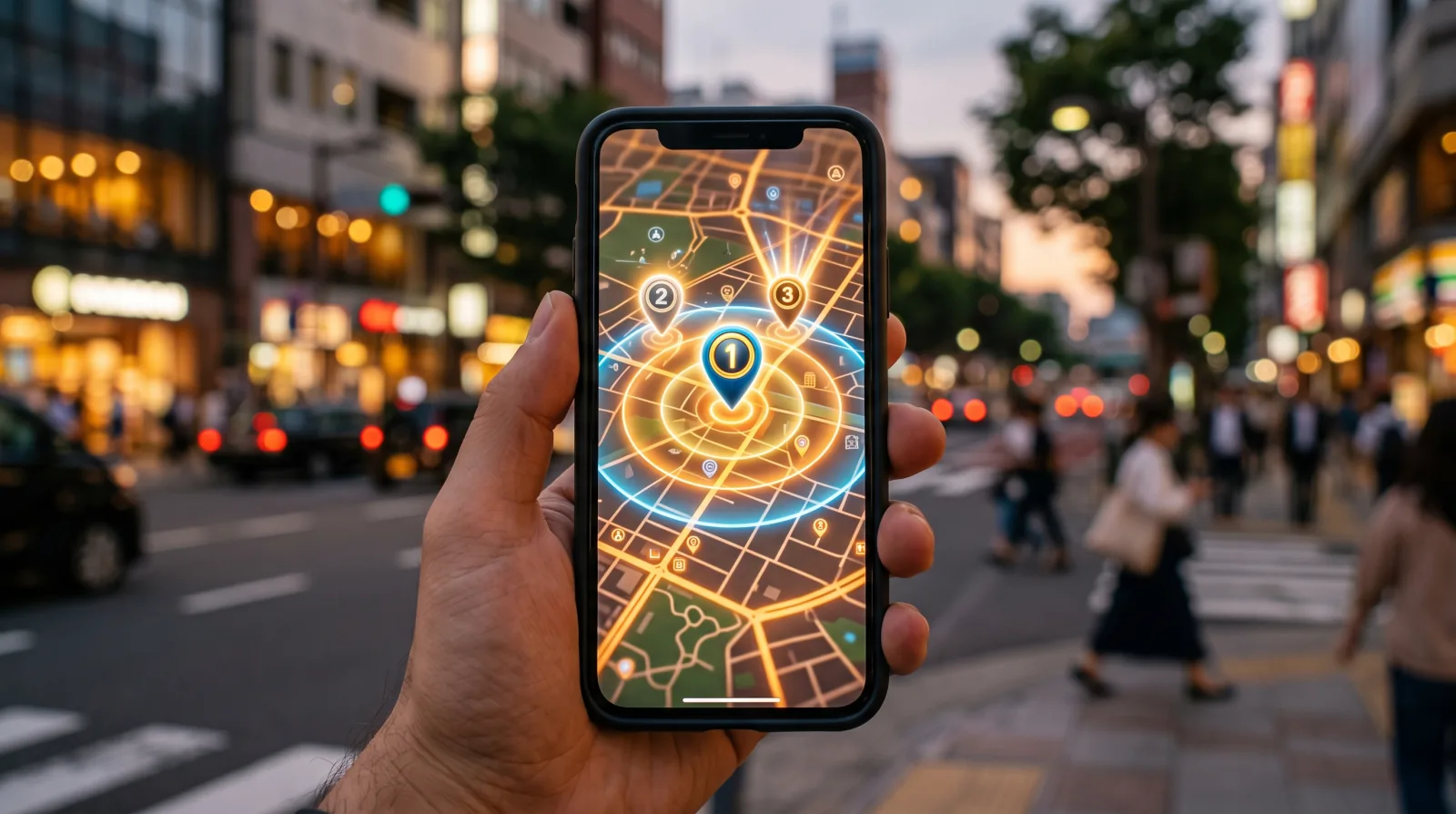
Let us imagine a family hardware store that has served the same neighbourhood for years. One spring, a national chain opens a large store on the same road. The owner opens Google Maps, types "hardware store", and asks the question every small business owner asks in that moment: who will Google show first, and what can I do about it?
Google answers the question itself, in a help page called "Tips to improve your local ranking on Google". The page is short and it is honest, and it contains one sentence that every owner should read twice: "There's no way to request or pay for a better local ranking on Google." Google's page for owners who wonder about hiring help says the same about ordinary search results: "Google never accepts money to include or rank sites in our search results, and it costs nothing to appear in our organic search results."
The same page adds: "Advertising with Google won't have any effect on your site's presence in our search results." So the local ranking follows the same rules for the chain and for you. What decides it, then? Let us look at Google's own words, factor by factor, and at what each one means for a single shop beside a national name.
What does Google say decides local results?
Google writes: "Local results are mainly based on relevance, distance, and popularity. Together, these factors help Google find the best match for customers' searches." On the same page it names the three factors relevance, distance and prominence, and defines each one.
| Factor | How Google defines it | Where a large brand has help | What a small business can do | |---|---|---|---| | Relevance | "How well a Business Profile matches what someone is searching for" | Nothing specific to size; Google asks every business for complete and detailed information | Fill in every part of the profile and describe each service in the customers' own words | | Distance | "How far each business is from the customer who's searching" | A chain appears wherever it has a location | Be precise about your real address or your service area | | Prominence | "How well-known a business is", based partly on links and on the number of reviews | A known name starts with recognition | Ask for reviews, reply to all of them, earn mentions from local websites |
It helps to remember how many small businesses there are. The US Small Business Administration counts 36,207,130 small businesses in the United States, 99.9% of all firms. In Canada, 98.2% of employer businesses were small in December 2024, according to Innovation, Science and Economic Development Canada. The national chain on your road is one of a small number of large firms. Most firms are small, as yours is.
Relevance: describing exactly what you do
Relevance, in Google's words, "is how well a Business Profile matches what someone is searching for." Google's advice is to "provide complete and detailed business info", and its tips list what that means: your full address if customers can visit you, your hours, including special hours for holidays, the type of business you are, and other details "such as parking or Wi-Fi availability."
Categories deserve care. Google's guidelines ask businesses to "use as few categories as possible to describe your overall core business" and to choose categories "as specific as possible". A good test, from the same guidelines: the category should complete the statement "This business IS a".
Here the owner of a small business has first-hand knowledge: the exact services the shop offers, the brands it stocks, the questions customers ask at the counter. Each of those details can appear in the profile and on the website, one clear page for each service. Google's guidelines, by contrast, ask chains to "maintain consistent names and categories across all of your business locations". The small business describes one place, and it can describe that place in full.
One warning belongs here. The name on your profile is the wrong place for keywords. Google writes that "Your name should reflect your business's real-world name, as used consistently on your storefront, website, stationery, and as known to customers." Your services go in their own sections.
Distance: the factor nobody can buy
Distance "refers to how far each business is from the customer who's searching. If a customer doesn't share where they are, Google uses what it knows about their location." No budget changes where a customer stands when she searches.
Here a small business competes with the chain under the same rule. A chain appears only where it has a location; a neighbourhood shop is already where its customers live. Your task is precision. Google's guidelines ask for "a precise, accurate address and/or service area", and they state that "P.O. boxes or mailboxes located at remote locations aren't acceptable."
If you travel to customers, as a plumber or a cleaner does, Google says "service-area businesses" should have "one profile for the central office or location with a designated service area." The guidelines also say: "Do not create more than one page for each location of your business". A separate profile for every nearby town breaks that rule, however tempting it may look.
Prominence: the factor where a known name helps
Prominence is where the national brand starts ahead. Google defines it as "how well-known a business is", and adds: "This factor's also based on info like how many websites link to your business and how many reviews you have. More reviews and positive ratings can help your business's local ranking."
A famous name brings recognition from the first day. But look at the two concrete signals Google names, links and reviews. Both are earned one at a time, and both are within the reach of a small business.
Reviews. Ask every satisfied customer, at the moment they are satisfied, whether they would write a few words on Google. Then reply to each review. Google writes: "When you reply to customer reviews, it shows that you value their feedback." It adds that positive reviews and helpful replies can help your business get noticed among the others. An owner who replies personally, with the customer's name and a real detail from the job, writes a reply that shows people who you are.
Links. Think of the websites in your own town that could mention you with a link: the local business association, the suppliers and partners you work with, the newspaper that covers local openings, the youth team whose shirts you sponsor. Each is a real relationship, and each tells Google that people in the area know your business.
Which basics does Google list first?
Before the three factors, Google's tips page lists practical steps. The first is to verify your business: "This tells Google that you're authorized to represent the business, so it's more likely to show up in search results." The second is to keep information current: "Businesses with complete and accurate info are more likely to show up in local search results." Then come replies to reviews, and photos and videos that "show customers what you offer and tell the story of your business". Retail shops in eligible countries can also show their in-store products.
None of this costs money. Google states that "creating a Business Profile and listing your business on Google is free." And the same work serves the new AI answers too: Google lists "Checking that your Merchant Center and Business Profile information is up-to-date" among the search basics that continue to matter for AI Overviews and AI Mode.
Where does a small business have the advantage?
In the end, the national chain has recognition and budget. The small business has closeness. The owner is in the neighbourhood every day, knows its street names and its seasons, and can change the holiday hours the same afternoon the decision is made. The photos can show the real team and the real shop. The replies to reviews can come from the person who did the work. The local links come from relationships the owner already has.
A simple monthly routine turns these into habits:
- Open your Business Profile and check that the hours, phone, address and services are correct.
- Add new photos of recent work, the team or the shop.
- Reply to every new review.
- Ask your happiest customers of the month for a review.
- Set special hours before any holiday.
- Make one effort toward a local mention: an association listing, a supplier's partner page, a local story.
For a wider sequence of work across the year, see a month-by-month plan, and for the free tools that support this routine, the free tools. Our Google Business Profile guide covers each section of the profile in detail, and small business SEO explains how local work fits the whole picture.
How does the website support the map listing?
The profile links to your website, and the website carries the detail the profile cannot hold: one page for each service, the areas you serve, answers to the questions customers ask. We describe what a small business website needs in website features big companies have, and how to plan those pages in content planning with a big-brand method.
Licheo offers the website, search and AI work that big companies pay whole teams for, done for your small business. Its agents build the website and make the business findable on Google and in AI assistants, and nothing goes live until you approve it. The reviews and the local relationships stay yours, as they should. To see where your site stands today, run the free Get Found Check: it reads your homepage, your domain records and your security certificate, and returns a grade in under 60 seconds.
Sources
- Tips to improve your local ranking on Google, Google Business Profile Help, Google, accessed 27 September 2026.
- Guidelines for representing your business on Google, Google Business Profile Help, Google, accessed 27 September 2026.
- Do you need an SEO?, Google Search Central, Last updated 5 June 2026, accessed 27 September 2026.
- Google Business Profile, Google, accessed 27 September 2026.
- AI features and your website, Google Search Central, Last updated 10 December 2025, accessed 27 September 2026.
- Frequently Asked Questions About Small Business, 2026, U.S. Small Business Administration, Office of Advocacy, Published February 2026, accessed 27 September 2026.
- Key Small Business Statistics 2025, Innovation, Science and Economic Development Canada, Last modified 23 April 2026, accessed 27 September 2026.