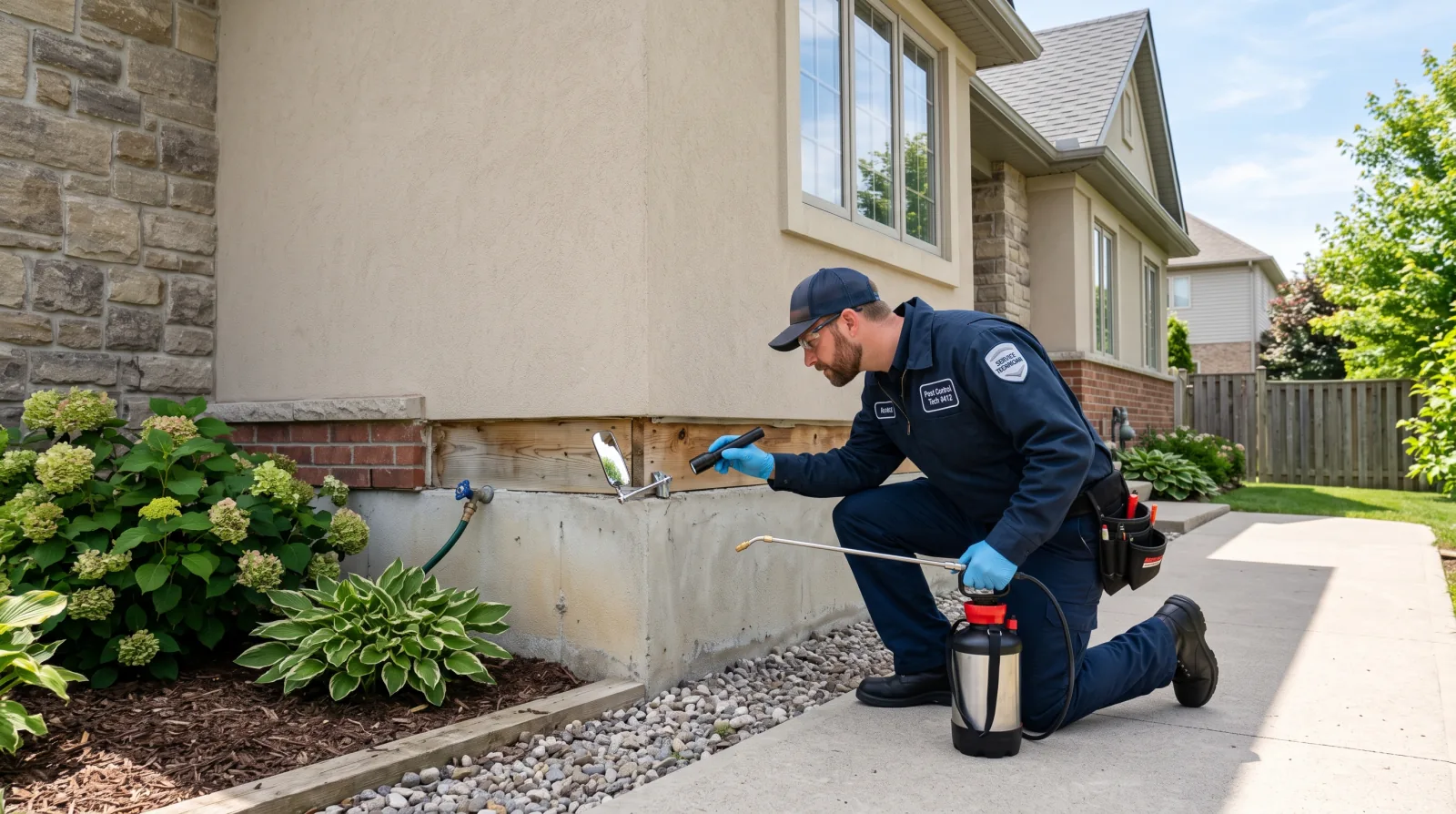
Let me tell you what makes pest control unlike almost any other local business, because understanding this one thing changes your entire approach to marketing. Nobody, and I mean nobody, searches "exterminator near me" in a relaxed frame of mind. There is always a trigger. A nest of wasps has appeared beside the door where the children play. Something is scratching inside the wall at three in the morning. A line of ants has claimed the kitchen and will not be negotiated with. By the moment those three words are typed, the homeowner is not comparing quotes at leisure; they are alarmed, and they want the problem gone today.
This urgency is your greatest opportunity and, if you ignore it, your greatest vulnerability. Because the decision is made in seconds, from whatever appears at the very top of the map. The pest control company that wins that panicked moment is not necessarily the best exterminator in town; it is the one that is visible at the instant of need. And in 2026, being visible means winning three battles at once: Google Maps, reviews, and the AI assistants that people increasingly ask before they even open a search bar.
TL;DR: Pest control is a business of urgency and season, so your SEO must be built for the panicked "exterminator near me" moment. Own it by fully optimizing your Google Business Profile, gathering fresh reviews relentlessly, building a dedicated page for each pest and each city you serve, and structuring your content so both Google and AI assistants can trust and cite you. Ride the seasons (ants in spring, wasps in summer, rodents in autumn) by preparing your content before demand peaks, not during it.
Why is getting found online so different for pest control?
Two words: urgency and season. Together they create a demand pattern unlike a dentist or a lawyer, whose customers deliberate for weeks. Your customer decides in the time it takes to feel a shiver of disgust and reach for the phone.
The urgency means the top of the local results is worth far more to you than to most businesses; the searcher rarely scrolls, rarely comparison-shops, rarely opens the second or third result. Whoever sits at the top with visible reviews and a phone number usually gets the call. That is the whole game in a single sentence.
The seasonality means demand is not steady; it surges and retreats with the calendar. Ants arrive with the warmth of spring. Wasps and hornets peak through summer. Rodents seek shelter as autumn cools. Bedbugs, sadly, respect no season at all. This rhythm has a critical implication for your SEO: the content that will win a summer wasp emergency must already be ranking before summer arrives, because SEO is slow to mature. You prepare in the quiet months for the storm you know is coming. One might think this is obvious, and yet the great majority of pest control companies scramble to publish a "wasp removal" page in July, when it is already too late for that page to rank in time.
How do you optimize your Google Business Profile for pest control?
Your Google Business Profile, the listing that shows in Maps and the local "map pack," is the single most important asset for that panicked search. It is what appears, with your rating and phone number, at the top of the results. Get it right and half your battle is won.
Fill in absolutely everything. The correct primary category (Pest Control Service), your genuine service area, your hours, and, this matters for urgency, whether you offer same-day or emergency service. Add real photos of your team, your vehicles, your work. List your specific services: rodent control, termite treatment, wasp and hornet removal, bedbug treatment, mosquito control. Each service you list gives Google another way to match you to a specific search.
Because pest control is a service-area business (you go to the customer, you do not have a shop they visit), the way you handle your service area matters enormously. For the complete method on ranking across multiple cities without a storefront in each one, our guide on local SEO for service area businesses is essential reading; the principles there apply directly to every exterminator.
Why do reviews matter so much for an exterminator?
Because when a frightened homeowner sees two exterminators at the top of the map, the tiebreaker is almost always the reviews: how many, how recent, how highly rated. Trust, in a moment of alarm, comes from other people's words.
The research consistently confirms how central reviews are to local decisions. BrightLocal's ongoing Local Consumer Review Survey finds that the great majority of consumers read online reviews when considering a local business, and that recency and rating strongly shape who they trust. For pest control, where the decision is fast and fear-driven, this effect is amplified.
So the strategy is simple to state and hard to sustain: ask for a review after every completed job, make it effortless (a direct link, a quick text), and respond to every review you receive, the good and the difficult ones alike. A steady stream of recent, genuine reviews is one of the most powerful ranking and conversion signals you have. Our deep dive on why reviews are the secret SEO weapon lays out exactly how to build that habit into your operations.
What pages should a pest control website actually have?
This is where most pest control websites fail. They have one vague "Services" page listing everything, and they expect Google to rank it for every pest and every city. It will not, because it is not specific enough to win any single search decisively.
Here is the structure that works, built step by step:
- A dedicated page for each pest you treat. One page for rodent control, one for termites, one for wasps and hornets, one for bedbugs, and so on. Each page should genuinely answer the questions a worried homeowner asks: how you treat it, what to expect, whether it is safe for pets and children, how fast you can come.
- A dedicated page for each city or area you serve. Combine the two where it makes sense: "wasp removal in [city]" is a far stronger match than a generic services page.
- Answer-first content. Because AI assistants and Google reward direct answers, begin each page by answering the searcher's core question in the first paragraph; do not make them hunt.
- Genuine, local photos. Show your team, your equipment, real work in real homes in the area. This builds trust with humans and demonstrates authenticity to Google.
- Clear emergency and same-day messaging. If you offer it, say so prominently. Urgency is your customer's dominant emotion; speak to it directly.
- Seasonal content published early. Have your wasp content ranking before summer, your rodent content before autumn. Prepare in the quiet season.
How do you get AI assistants to recommend your company?
Here is the newest front, and it is growing quickly. People no longer only search; they ask. "Who removes wasps near me?" spoken to a phone. "Best exterminator for a rodent problem in [city]?" typed into an AI assistant. And the assistant answers with a shortlist, often naming specific businesses.
To be on that list, your business must be legible to a machine. That means a complete, consistent Google Business Profile; a website with clear, answer-first content and proper business structure; and plenty of the reviews and mentions that signal you are real and trusted. The same clarity that helps a frightened human decide quickly also helps an AI decide whom to name. In the end, the two audiences want the same thing: a clear, trustworthy, specific answer to "who can fix my problem, near me, now?"
A short story about the wasp season that came early
A pest control operator I spoke with told me about the summer he learned this lesson. For years his website had a single services page, and every summer he relied on paid ads to catch the wasp rush. One year, on advice, he built individual pages (wasp removal, hornet nests, each tied to the towns he covered), and he built them in the calm of late winter, months before demand.
When the warm weather arrived and the calls began, something had changed. Homeowners were finding those specific pages directly through Google, and, to his genuine surprise, an AI assistant a customer had used had recommended his company by name, apparently drawing on the clear, specific content he had published. His ad spend that summer dropped, and yet his booked jobs rose. He had simply prepared, quietly, before the season. Alla fine, that is what pest control SEO rewards: preparation before the panic, not scrambling during it.
Curious where your pest control business actually stands in Google Maps and AI search right now? Check your SEO Standings for a clear picture, or hand the whole thing to our done-for-you SEO team and prepare for next season the right way.