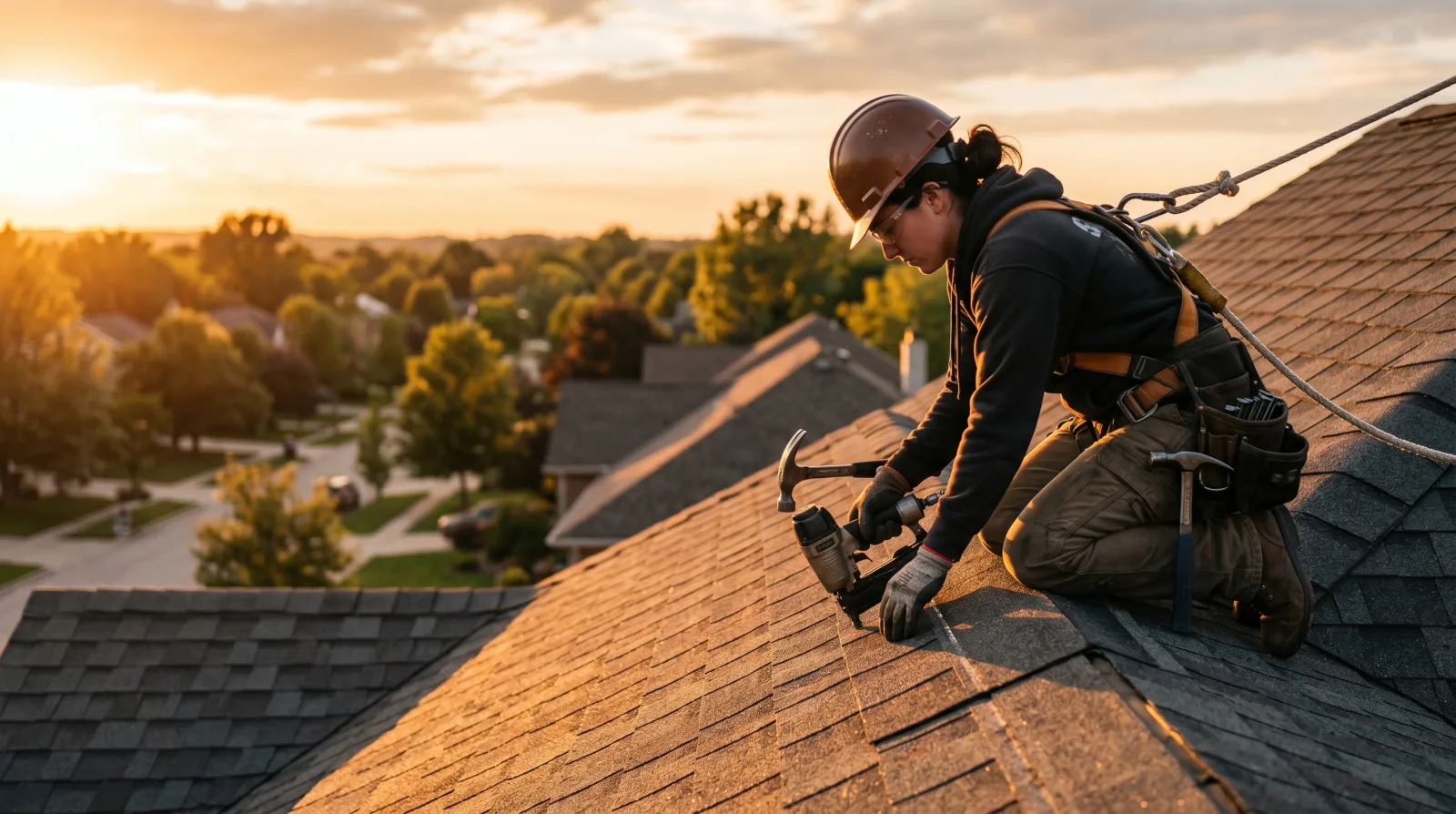
Every roofer I have ever spoken with tells me some version of the same story. A hailstorm rolls through town, and within forty-eight hours the neighborhoods are full of trucks with out-of-state plates, storm chasers knocking doors, quoting fast, signing contracts with homeowners who have never heard of them. Meanwhile the local roofer, licensed here, insured here, the one who will still be here in five years when the flashing needs attention, watches jobs in his own zip code go to a company that did not exist in town the week before. The unfairness of it stings. But here is the uncomfortable question one must ask: when those homeowners pulled out their phones and searched "roof repair near me," who did Google show them?
The storm chasers win not because they roof better; without doubt, they usually roof worse. But they understand that the job is won in the search results before any ladder touches a wall. This guide explains, in plain language, how a local roofing company builds that same visibility honestly, owns it permanently, and gets found first when the next storm comes.
The short version, if you read nothing else: marketing for roofers in 2026 comes down to five connected assets. A complete and active Google Business Profile that earns a place in the map results for "roofer near me." A steady flow of recent reviews, with recency mattering enormously, because a storm-panicked homeowner trusts what was written last month, not last year. A website that gets a worried homeowner from leak to phone call in seconds, and that quietly proves you are local, licensed, and insured. Pages that answer the questions homeowners actually search, from repair costs to insurance claims. And a presence that AI assistants like ChatGPT can find and confidently recommend. Build these five before the storm, and the storm season belongs to you.
Why Do Storm Chasers Keep Winning Jobs That Should Be Yours?
Because they treat visibility as the product. They arrive with door-knockers, urgency scripts, and, increasingly, strong online profiles, while many established local roofers rely on reputation and referrals that never made it onto the internet. The homeowner under a leaking roof chooses whoever appears first and looks most trustworthy in that moment of panic.
It must be said honestly: word of mouth still exists, but it has moved; it now lives on your Google profile, in your reviews, and inside AI-generated answers. Consider what the data says about the moment of decision. BrightLocal's 2026 Local Consumer Review Survey found that 31% of consumers will only use a business rated 4.5 stars or higher, nearly double the year before, and that 74% seek out reviews written in the last three months. Read that second number again in roofing terms: the homeowner deciding after a storm is not weighing your twenty years of good work; they are weighing what strangers wrote since the spring.
And a newer path has opened entirely. The same survey found that 45% of consumers now use AI tools like ChatGPT to get local business recommendations, up from just 6% a year earlier. When a homeowner asks an AI "who is a reliable roofer near me who handles insurance claims?", the answer comes back with names. Whether yours is among them depends on signals you can start building today.
The good news, and there is genuinely good news, is that the storm chaser's advantage is temporary by nature: they leave. Visibility, once you build it, stays. They must rebuild their pipeline in every new town; you only have to win your own, once, and then defend it.
What Actually Brings Roofing Jobs in 2026?
Five things: ranking in Google's local map results, a strong and recent review profile, a website that converts a worried homeowner into a call, content that answers real roofing questions, and visibility in AI assistants. Each strengthens the others, none requires buying leads, and all five outlast any single storm season.
Let us take them in order.
Your Google Business Profile is the new door knock. When a homeowner searches "roof repair [your town]" or "emergency roof tarping near me," Google shows a map with a handful of companies before any website appears. Categories, service list, photos of real jobs, your service area, and, above all, reviews decide whether you are on that map. For a roofing company, this single free profile can outproduce every lead platform combined, because the homeowner who finds you there calls you alone, not you and four competitors.
Reviews are the trust the storm chaser cannot fake locally. This is your structural advantage, so use it. Years of local work means years of potential reviewers; yet most roofers have collected a fraction of the reviews their work has earned. Recency is decisive, and so is the conversation: per BrightLocal, 80% of consumers say they are likely to use a business that responds to all of its reviews. Every review naming your town, and every warm response under it, is a small piece of armor against the next wave of out-of-town trucks.
Your website must do two jobs at once. First, speed: a homeowner with water coming through the ceiling needs your tappable phone number within one screen. Second, proof: license number, insurance, local address, photos of local jobs, years in the community: the exact things a storm chaser cannot show. Most roofing websites do neither well; they open with a drone shot and a slogan, and bury both the number and the proof.
Content earns the searches that precede every job. "How much does a roof replacement cost," "will insurance cover hail damage," "repair or replace after a storm," "how long does a roof last in [your region]": each deserves its own honest page. This is the heart of roofing SEO: answer the questions homeowners are already typing, plainly, with realistic ranges where you can give them. These pages bring in homeowners at the moment of need, and they are precisely what AI assistants quote when asked the same questions.
AI assistants are the referral source that never sleeps. With ChatGPT alone reaching more than 800 million weekly users, a growing share of homeowners simply ask the AI to recommend a roofer, and the AI assembles its answer from your Google profile, your reviews, and your website. The same foundation that wins the map wins the machine.
What Can You Do Yourself, Step by Step?
Start with your Google Business Profile, then build a same-day review habit, then put your phone number and local proof at the top of your website, then publish one homeowner-question page per month. An owner investing two hours a week, in the slow season ideally, can lay the entire foundation in about sixty days, well before the next storm tests it.
The sequence I would follow:
- Complete your Google Business Profile entirely. Primary category "Roofing contractor," secondary categories for what you genuinely offer (gutters, siding, skylights). Define your service area honestly, list every service individually: repair, replacement, inspections, emergency tarping, and put your license number in the description. If you answer storm emergencies, say so everywhere.
- Add photos of real local jobs, monthly. Before-and-after shots, the crew on a roof, the finished ridge line against a recognizable local skyline. Taken on a phone, on the job; homeowners distrust stock photography instinctively, and recency of uploads is itself a signal to Google.
- Build the review habit. The single highest-leverage change in this guide: when a job closes well, ask for the review that same day, by text, with the direct link to your Google review form. Mention the town: a reviewer who writes "replaced our roof in [neighborhood]" is doing your local SEO for you. Make the ask part of the final walkthrough, as routine as collecting the check.
- Respond to every review. Warmly to the kind ones, calmly and factually to the rare bad one; the response is read by next year's homeowners, not just this year's reviewer. Never argue in public; offer to make it right offline.
- Run the leak test on your own website. Open it on your phone and imagine water dripping into your living room. Can you find a tappable phone number, proof of license and insurance, and your town's name, all within one screen? If not, fix that before anything else on this list.
- Write one question-page per month. Take the question homeowners ask most, for example "how much does a new roof cost here?" or "will my insurance cover this?", and answer it honestly on its own page, with realistic ranges and a clear next step. An insurance-claims guide alone, written plainly, will outperform most paid leads; and twelve months of such pages become a quiet, permanent salesforce. The same playbook works across the trades; we laid out the contractor version in SEO for contractors.
What Do Most Roofers Get Wrong With Marketing?
The most common mistakes are marketing only when the schedule empties, depending on bought leads shared with four competitors, hiding prices and license details, collecting reviews in bursts instead of steadily, and chasing the whole metro instead of dominating their real service area. Each one hands the next storm to the chasers.
Allow me a brief story. A roofing company I reviewed last year had thirty-one years of history, beautiful workmanship, and a Google profile with fourteen reviews, the newest from three years prior. After a spring hailstorm, a two-year-old storm-chasing outfit with four hundred fresh reviews took, by the owner's own estimate, most of the insurance work in his area. Thirty-one years of reputation, invisible; two years of marketing, victorious. The work was never the problem. The visibility was.
The patterns repeat with remarkable consistency:
- Feast-or-famine marketing. Attention to visibility only when the pipeline dries up; but rankings and reviews compound over months, so the work must happen before the storm, not after it.
- Renting demand from lead platforms. Shared leads put you in a four-way price race for a homeowner who never chose you. Useful scaffolding while you build; ruinous as a foundation.
- Secrecy about money and credentials. The homeowner who cannot find a price range or a license number does not call to ask; they call the company that told them.
- Review droughts. Hundreds of satisfied customers over the years, single digits on the profile. The willingness exists; the asking does not.
- Chasing the metro. Trying to rank across the entire region instead of owning the towns you actually drive to; service-area businesses win by depth, and we explain the mechanics in local SEO for service-area businesses.
What If You Would Rather Stay on the Roof?
A legitimate answer; you built a roofing company to build roofs, not to manage review funnels and service pages, and the steps above, simple as they are, demand consistency that a busy season rarely allows. The truth is, this is precisely the situation Licheo exists for: a done-for-you service that gets roofing companies found by more homeowners, in Google's map results, in classical search, and in AI assistants like ChatGPT, handling the Google Business Profile, the review strategy, the website's proof and conversion work, and the homeowner-question content while you and your crews stay on the roof. There is no software to learn and no dashboard to check from a job site; the work is simply done, and reported in plain language. The honest first step costs nothing: check your SEO Standings to see exactly where your company stands today against the other roofers in your area, including the storm chasers, and which of these five assets are quietly sending your jobs elsewhere.
For the complete picture of how search works in this trade, our roofing SEO industry page lays it all out. Pricing is simple: contact us, and we will look at your situation together.