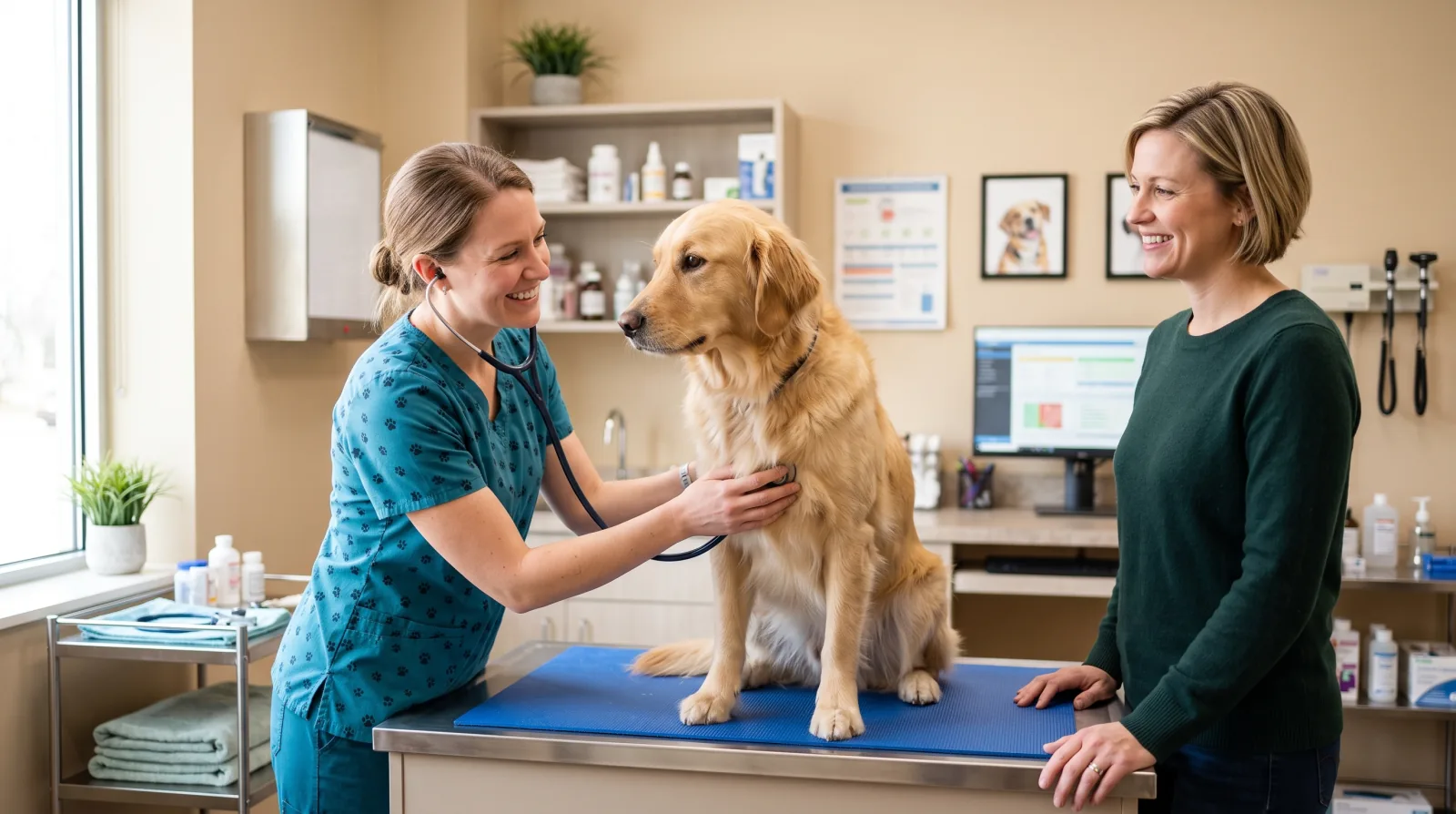
Think for a moment about what a new grooming client is worth. An owner chooses a groomer once. If the first visit goes well, they come back every six to eight weeks, and they keep coming back for the life of the dog, and then for the next dog. One search, one decision, and years of appointments follow.
Most grooming businesses market as if each appointment were a one-off, chasing every booking with the same energy. The truth is that the whole task is winning that single first decision, and the first decision is made, almost always, on a phone, by a person who is frightened for their dog.
In short: an owner picks a groomer by asking, in some form, will my dog be safe and will they know what to do with this coat. The groomers with full calendars answer both questions before the phone rings: a profile with photographs of the room and of calm dogs mid-groom, reviews that name the dog and the breed, a website page about the first visit for nervous dogs, and a page for each breed they see most. The same material is what an AI assistant reads when an owner asks it for a recommendation.
How an owner looks for a groomer
The searches are predictable, and each one tells you what the owner is worried about. "Dog groomer near me" and "dog grooming" with the town are the general ones, typed by an owner who has just moved, just got a dog, or just left their last groomer. "Mobile dog groomer" is an owner whose dog hates the car or who cannot get away. A breed with the word groomer after it, "doodle groomer", "poodle groomer", "husky groomer", is an owner who has been let down by somebody who did not understand the coat. "Groomer for anxious dogs" or "gentle dog groomer" is the frightened owner directly. "Nail trim near me" is a small job that becomes a full client if it goes well.
And then there is the version that did not exist a few years ago: an owner asks an AI assistant "who is a good groomer for a nervous rescue dog near me". The assistant builds an answer from reviews, directories and web pages that mention exactly those things. If your reviews say your name and five stars and nothing else, there is nothing for it to quote.
Every one of these searches deserves to find something on your profile or your website that speaks to it directly. That is the whole method, and the rest of this piece is how to build it.
The profile that reassures
For most of these searches the first thing the owner sees is the map result with three groomers in it. The tap they make next is decided by your Google Business Profile in a few seconds, so begin there.
Set the primary category to Pet groomer. Add Mobile pet groomer or another category only where it applies, because a category you do not serve confuses owners and invites Google to look harder at the profile. Fill in the hours completely, including which days are closed, and add the booking link if you take bookings online, because an owner who has just found you at nine at night wants to act now.
Then the photographs, and here groomers have an advantage over most trades: the work is visible and it is lovely to look at. The photographs that win the nervous owner show the room, clean and calm. The table and the bath. A dog mid-groom, relaxed, with the groomer's hands visible. The dryer and how you use it. The waiting area. An owner is checking that this is a real, calm, clean place where a frightened dog will be handled gently, and a dozen photographs of that beat a hundred of finished haircuts. Ask owners' permission before posting their dogs, and most will be delighted.
The description should say, in plain words, which breeds and coats you specialise in, whether you take nervous or elderly dogs, whether you do cats, and which areas you cover if you are mobile. That text is what an assistant reads. Our general guide to the profile, the thirty minute profile fix, applies in full.
Reviews that name the dog
A grooming review has an unusual power, because the fear is specific and a good review addresses it precisely. "Great groomer, highly recommend" tells the next owner nothing. "Took our nervous rescue collie, Bramble, who had been turned away elsewhere, and she came out calm and beautifully done" answers the exact question the next owner has, and it contains the words an assistant looks for.
So ask at pickup, when the owner sees the result and the relief shows on their face, and tell them what would help: the dog's name, the breed, and how the dog coped. Owners write better reviews when you make it easy. Send the link by text within the hour. Reply to every review by name, and use the dog's name in the reply, because the next owner reading it sees a groomer who remembers the dogs. The mechanics of asking are in getting more Google reviews.
When a bad review comes, and it will, reply with the facts and without argument. A matted coat that had to be clipped short, a dog that would not tolerate the dryer, an owner who expected a show cut from a pet groom: say what happened, calmly. The next owner is reading your reply more carefully than the complaint.
The website pages that fill a calendar
Most grooming websites are a single page with a price list and a gallery. That page cannot speak to the doodle owner, the mobile enquiry and the frightened owner at once, so here is the set that can.
A pricing page that explains the method. You price by size, coat type and condition, and every groomer knows this, but the owner does not. Say it plainly: what decides the price, what each groom includes, how matting and extra time are handled, and what a puppy's first visit costs or how it is priced. This removes the most common first question from every phone call, and an owner comparing groomers trusts the one who explained.
A first visit page. For nervous dogs, puppies, elderly dogs, rescues. What happens when they arrive, how you introduce the dryer, when you stop if a dog is distressed, what the owner should bring, whether they can stay. This one page wins the frightened owner more reliably than anything else you can publish, and almost no groomer has it.
A page for each breed you see most. Doodles in most towns, then whichever breeds your area favours. What that coat needs, how often, what goes wrong when it is neglected, what you do differently. Real photographs of that breed on your table. The owner who was let down elsewhere is searching for exactly this.
A mobile page, if you travel. With the areas you cover, named, and something true about each, such as parking or where you usually set up, because a list of twenty town names with nothing else reads as junk to Google and to the owner. The rule is in how to build service area pages without a penalty.
And on every page, the booking button and the phone number where a thumb can reach them.
Recurring clients change the maths
Because a client who stays is worth years of appointments, the effort after the first visit matters as much as the effort before it. Book the next appointment at pickup. Send a reminder. Notice which clients have lapsed and send a short, human message. The same pattern works for every business built on repeat appointments, and we looked at it for a neighbouring trade in SEO for hair salons: the businesses that treat search as the way to win a relationship, rather than a booking, are the ones whose calendars stay full without advertising.
Veterinary clinics, incidentally, are the other business your clients already trust, and a groomer who is known to a local vet, and mentioned by them when an owner asks, gains a source of referrals that no website can match. We covered how clinics themselves get found in SEO for veterinary clinics, and a groomer who introduces themselves to two local clinics with a card and a clean reputation tends to hear from them.
About Instagram
Groomers love Instagram, and rightly: the before and after is a beautiful thing, and other groomers and existing clients enjoy it. Keep it. But be honest about what it does. It shows the work to people who already know you. The new client, the one worth years of appointments, comes from a search on a phone for a groomer near them, or from a question to an assistant, and neither of those reads Instagram well. Search visibility is where the first decision is made, and it deserves the first hour of your marketing week.
Where to start
If the profile has a logo and finished haircuts, spend this week photographing the room and the process, and asking the last ten clients for a review that names their dog. If the website is a single page, write the first visit page, because it is the page the frightened owner is looking for and nobody in your town has it. Then the breed page for whichever coat you see most.
The owner is frightened, choosing once, and hoping to stay for years. Be the groomer whose profile, reviews and pages took that fear seriously. Our free visibility check will show you, in plain language, what an owner and an assistant currently see when they look for a groomer like you.