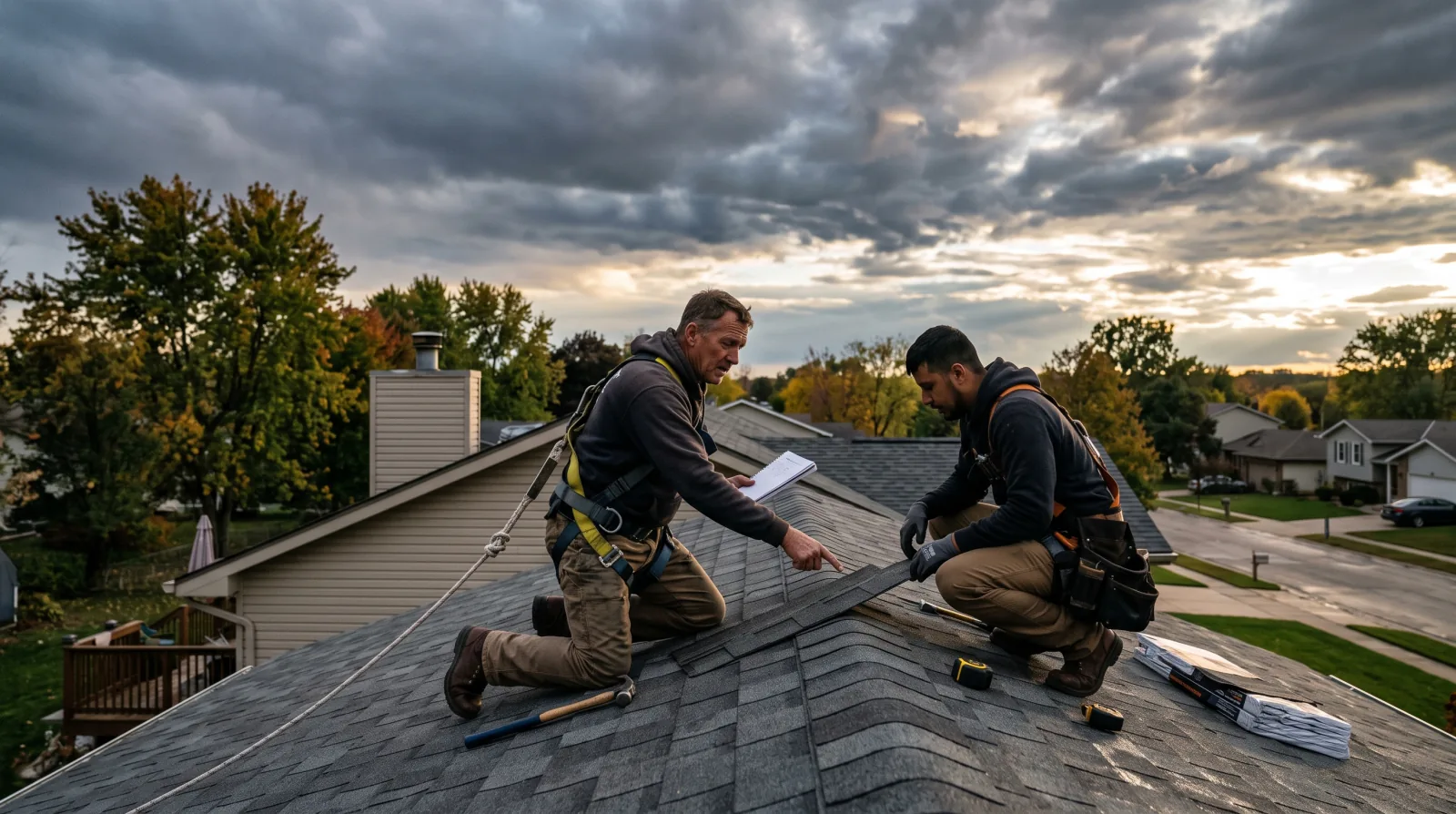
In the weeks after a hurricane, a Florida homeowner with a damaged house has a short list of questions. Can the city stop me from rebuilding? How long will the permit take? How high must the new floor be? And if I only repair, what does the 50 percent rule mean for me?
Each of these questions has an answer written in a Florida statute, a federal regulation or the building code. A builder of elevated homes (homes raised above the expected flood height) knows these answers from the work itself, and the builder's website should give them too.
This post sets out the rule behind each question, with its number, so that you can publish a plain answer on your own website. One caution before we begin: laws, codes and flood maps change, so read the current statute and your local code, or ask the building department, before you quote a rule to a client.
Can a city or county stop rebuilding, or make its rules stricter, after a hurricane?
For the three hurricanes of 2024, the law forbids it until October 1, 2027. Senate Bill 180 of 2025 (SB 180) became chapter 2025-190 of the Laws of Florida, approved by the Governor on June 26, 2025. Section 28 of that law covers each county listed in the federal disaster declaration for Hurricane Debby (DR-4806), Hurricane Helene (DR-4828) or Hurricane Milton (DR-4834), and each city within those counties.
Before October 1, 2027, such a county or city may not propose or adopt a moratorium (a temporary stop) "on construction, reconstruction, or redevelopment of any property damaged by such hurricanes". The same section bars "more restrictive or burdensome" changes to the local land-use plan or land development regulations, and "more restrictive or burdensome" procedures for reviewing or approving a site plan or a development permit.
The section applies back to August 1, 2024, and it expires on June 30, 2028. It also gives a resident, or the owner of a business, the right to bring a civil action against a county or city that violates it. Which counties are covered? FEMA's declaration records for the three storms, read together, list all 67 Florida counties. For the period the section covers, then, the limit applies in every county of the state.
What is the permanent rule for the next hurricane?
The same law created section 252.422 of the Florida Statutes, which has no end date. For 1 year after a hurricane makes landfall, an "impacted local government" may not propose or adopt a moratorium on construction, reconstruction or redevelopment of any property, or more restrictive or burdensome land-use rules or permit procedures. The statute defines an impacted local government as a county that is listed in a federal disaster declaration and lies entirely or partially within 100 miles of the track of the storm while it was a hurricane, together with the cities in that county. Any person may sue to enforce the section, after giving the local government notice and 14 days to withdraw the measure.
The 2026 Legislature considered changes and enacted none. Senate Bill 840 passed the Senate 38 to 0 on February 19, 2026, and the Florida Senate's bill page records its last action, on March 13, 2026, as "Died in Intergovernmental Affairs Subcommittee" in the House. The 2025 text of section 252.422 therefore remains in force.
What does the 50 percent rule mean for a repair?
The rule comes from the federal flood insurance regulations. Title 44 of the Code of Federal Regulations, section 59.1, defines a "substantial improvement" as any reconstruction, rehabilitation, addition or other improvement of a structure whose cost "equals or exceeds 50 percent of the market value of the structure" before the work starts. "Substantial damage" is damage whose repair would cost 50 percent or more of the market value the structure had before the damage.
Why does the 50 percent figure matter to a homeowner? Because the Florida Building Code says that, in flood hazard areas, "repairs that constitute substantial improvement shall require that the building comply" with the code's flood sections (Existing Building volume, section 401.5). For a house, those sections include the floor height described in the next part. When the cost of the repair reaches 50 percent, the whole building must meet those sections, floor height included.
Senate Bill 180 added one protection here. Under section 163.31795, a local government that takes part in the National Flood Insurance Program "may not adopt or enforce an ordinance for substantial improvements or repairs to a structure which includes a cumulative substantial improvement period". In plain words, the city may not add together repairs made over a period of time in order to reach 50 percent.
How high must the floor be in a flood zone?
The federal regulation defines a special flood hazard area as land with a 1 percent or greater chance of flooding in any given year. The flood with that 1 percent chance is the base flood, and its height on the flood map is the base flood elevation. Section R322 of the Florida Building Code, Residential, 8th Edition, as compiled by the Florida Division of Emergency Management, then adds 1 foot.
| Zone on the flood map | What must be at or above base flood elevation plus 1 foot | |---|---| | A and AE zones (flood hazard areas without high-velocity waves) | The lowest floor | | V zones (coastal areas with high-velocity waves) and Coastal A zones | The bottom of the lowest horizontal structural member that supports the lowest floor |
The code names a second height, the design flood elevation, which is the flood height on the community's own adopted flood map; where that is higher, the code requires it. We give no wind speed for any place in this post. Take it from the code's maps for the exact site, or from the building department.
How long does a building permit take in Florida?
Section 553.792 sets the longest time a local government may take. The days are business days, counted from a complete application, and the deadlines apply when the applicant uses the local government's own plan reviewer.
| Permit | Deadline to approve, approve with conditions, or deny | |---|---| | Work valued under $15,000 on an existing single-family home | 5 business days | | Residential units, including a single-family home, in a structure under 7,500 square feet | 30 business days | | Residential units in a structure of 7,500 square feet or more | 60 business days | | Multifamily residential of up to 50 units; site plans and plats that need no public hearing | 60 business days |
A separate deadline of 10 business days applies to a single-family home applied for by a licensed contractor on behalf of an owner who takes part in a federal disaster recovery grant program (Community Development Block Grant-Disaster Recovery).
The local government has 5 business days after receiving the application to say in writing what is missing; if it sends no notice, the application is automatically treated as complete. If it misses the decision deadline, it must reduce the permit fee by 10 percent of the original fee for each business day of delay; the statute excepts an extension agreed in writing, a delay caused by the applicant, and extraordinary circumstances. When the office sends written reasons in time and the applicant corrects the application, the office has 10 business days to decide, and after that the reduction is 20 percent for each business day.
These separate deadlines replaced a single 120-day rule through chapter 2024-191 (House Bill 267), effective January 1, 2025. The 5-business-day deadline was added by chapter 2026-63, effective July 1, 2026.
What is a private provider, and how fast must the building department act when you use one?
Section 553.791 lets the owner, or the owner's contractor with the owner's written authorization, hire a private provider: a licensed building code administrator, engineer or architect who reviews the plans and inspects the work in place of the local office's staff. The statute then sets short deadlines for the local building official.
| Step | Deadline for the building official | If no notice is given in time | |---|---|---| | Notice of incomplete forms or documents after the permit application | 10 business days; 5 for a single-trade review on a one or two family home | The permit is deemed approved | | Permit decision when an engineer or architect has sealed the sworn statement that the plans comply | 10 business days to issue the permit or list the specific deficiencies | The permit application is deemed approved | | Certificate of occupancy (the document that allows the home to be lived in) | 10 business days; 2 for one and two family homes | The request is automatically granted |
"Deemed approved" means that the law itself treats the permit as approved. On fees, the statute says the local jurisdiction "may not charge fees for plans review or building inspections" that the private provider performs, and it says local officials may not "prohibit or discourage" the use of a private provider.
Which edition of the Florida Building Code applies?
The Florida Building Commission's website states that the effective date of the Florida Building Code, 8th Edition (2023), is December 31, 2023. A 9th Edition (2026) has been proposed. The Commission published a notice of proposed rule on September 23, 2026, with a proposed effective date of December 31, 2026, and public comments are open through October 14, 2026. It is a proposal, and the 8th Edition remains the code in force.
Section 553.73(7) explains the timing. The Commission updates the code every 3 years, and an updating rule takes effect no sooner than 6 months after the updated code is published. The same subsection settles which edition governs a job: the edition "in effect on the date of application for any permit" governs the permitted work "for the life of the permit".
Which license must the builder hold?
Section 489.105 of the Florida Statutes defines the classes. A residential contractor may build, remodel or repair one-family, two-family or three-family residences "not exceeding two habitable stories above no more than one uninhabitable story". A building contractor may build commercial buildings and residential buildings of up to three stories. A general contractor is unlimited as to the type of work. By these definitions, a four-unit building is outside the residential contractor's class.
The statute also separates certified from registered contractors. A certified contractor may contract in any jurisdiction in the state; a registered contractor may contract only in the local jurisdictions for which the registration was issued. State your class and your license number on your website, and say in one sentence what that class allows you to build.
What should a builder's website publish on these questions?
One page for each question, with the question as its title and the answer in its first paragraph: how long a permit takes, how high the floor must be, what the 50 percent rule means for a repair, what a private provider is. Name the statute or code section on each page, link to it, and write the date on which you last checked it. Then add what your own work gives you: the permit times you have measured on your jobs in each county, and the homes you have raised, each on its own page, as our guide to project pages describes.
Why publish before the next storm? Google's guide to search engine optimization (usually shortened to SEO: the work of making a website findable in search results) says: "Every change you make will take some time to be reflected on Google's end. Some changes might take effect in a few hours, others could take several months." A page first published in the week after landfall has no assurance of appearing in time.
And where do people begin? The National Association of REALTORS asked buyers who bought between July 2023 and June 2024: as a first step, 43 percent looked online for properties, and 1 percent contacted a builder or visited builder models. The survey is national and describes home buyers, the nearest measured group to a builder's clients that we found.
How ready are builders' websites for this? On September 29, 2026, we read 80 small builder websites in Arizona and Florida, wrote one note per site and kept it only when a second reading confirmed it, so every count is a minimum. At least 14 of the 80 had no blog or news section linked from the homepage or the menu, which is the section where answers like these would go. At least 14 showed a footer year earlier than 2026, and on a page that states a legal rule the date is part of the answer. One coastal builder's tap-to-call link dialed a number one digit different from the number printed beside it. The full findings are in what 80 small builder websites get wrong, and our guide to the builder's website explains how to repair each fault.
The same reasoning applies to the question of a second home on a lot, which Florida leaves to each county and city: see Florida's ADU rules and a small builder's website. For the full plan, read our guide to marketing for home builders and our page on search work for home builders.
Licheo does this work as one service in three parts: we build the website, we make it findable on Google and citable by AI assistants, and we make each page tell a visitor what you do, why to trust you and what to do next. It is one flat monthly fee, month to month, with no contract; contact us for pricing.
To check your own site today, run the free Get Found Check. You enter your website address, and in under 60 seconds you receive a letter grade from A to F, findings in six areas, and a separate grade for readiness for AI assistants. It reads one page, so the grade is a place to start.
Sources
- Chapter 2025-190, Laws of Florida (Senate Bill 180), Florida Department of State, approved June 26, 2025, accessed 29 September 2026.
- OpenFEMA Dataset: Disaster Declarations Summaries, v2 (records for DR-4806, DR-4828 and DR-4834), Federal Emergency Management Agency, accessed 29 September 2026.
- Section 252.422, Florida Statutes: Restrictions on county or municipal regulations after a hurricane, The Florida Legislature (Online Sunshine), 2026 Florida Statutes, accessed 29 September 2026.
- SB 840: Land Use Regulations for Local Governments Affected by Natural Disasters (2026), The Florida Senate, last action March 13, 2026, accessed 29 September 2026.
- 44 CFR 59.1: Definitions, Electronic Code of Federal Regulations, accessed 29 September 2026.
- Flood Resistant Provisions in the 8th Edition Florida Building Code (2023), Florida Division of Emergency Management, Floodplain Management Office, accessed 29 September 2026.
- Section 163.31795, Florida Statutes: Participation in the National Flood Insurance Program, The Florida Legislature (Online Sunshine), 2026 Florida Statutes, accessed 29 September 2026.
- Section 553.792, Florida Statutes: Building permit application to local government, The Florida Legislature (Online Sunshine), 2026 Florida Statutes, accessed 29 September 2026.
- Chapter 2024-191, Laws of Florida (House Bill 267), Florida Department of State, approved May 16, 2024, accessed 29 September 2026.
- Chapter 2026-63, Laws of Florida (House Bill 803), Florida Department of State, approved May 6, 2026, accessed 29 September 2026.
- Section 553.791, Florida Statutes: Alternative plans review and inspection, The Florida Legislature (Online Sunshine), 2026 Florida Statutes, accessed 29 September 2026.
- Florida Building Commission website, Florida Department of Business and Professional Regulation, accessed 29 September 2026.
- Rule 61G20-1.001, Florida Building Code Adopted: notice of proposed rule, Florida Department of State, published September 23, 2026, accessed 29 September 2026.
- Section 553.73, Florida Statutes: Florida Building Code, The Florida Legislature (Online Sunshine), 2026 Florida Statutes, accessed 29 September 2026.
- Section 489.105, Florida Statutes: Definitions, The Florida Legislature (Online Sunshine), 2026 Florida Statutes, accessed 29 September 2026.
- Search Engine Optimization (SEO) Starter Guide, Google Search Central, last updated December 10, 2025, accessed 29 September 2026.
- 2025 Home Buyers and Sellers Generational Trends Report, National Association of REALTORS Research Group, April 1, 2025, accessed 29 September 2026.